Sunday, December 6, 2020

Ecuadorian #WFPB Bean Soup Improv 002 Locro de Lentejas - Lentil Soup

Locro de Lentejas (Ecuador)

Lentil soup with Cabbage

Note: Ecuadorian cuisine tends to be mild, so I left out the chilis and used only three (seeded) jalapeños, and then I split the soup in two and finished a mild version with some miso at the end, and a spicy version with some gochujang.


Ingredients

1 lb whole lentils
1 lb young potatoes (the kind with the thin skin, either yukon gold or redskin), quartered or smaller, depending on the size and personal preference
one small green or savoy cabbage, quartered and sliced in 1/4" strips
1 white onion cut up in small pieces,
2-3 large red onions, sliced thin
4 green chilis, sliced thin, with seeds (optional)
2 jalapeño peppers, sliced thin (without seeds)
6 cloves of garlic, crushed and chopped fine.
1-2 king mushroom cut in strips, or baked seitain cut in cubes.
1 tsp panchpuran
1 teaspoon of savory
1 teaspoon of tarragon
1 tsp rosemary
1 tsp thyme
5 bay leaves
2 pints of low sodium vegetable stock
3 pints of water
1 bunch of cilantro, chopped
 

Seasoning to taste with Braggs Liquid Aminos. Alternatively, dissolve one heaping tablespoon of miso paste (or, if you like spicy, gochujang) in water and add at the end and use less liquid aminos.

Anyway you finish it up, you'll have a great winter soup you can stick a fork in!


Preparation

Dry fry the onions with the peppers, panchpuran over a low flame for about 3/4 minutes until they get soft and start to brown. Add a splash of veggie broth as needed, so it does not stick to the pan.

Add garlic, the vegetable stock and the herbs & spices, the lentils and the seitan (or mushrooms) and (after about 15 mins) the potatoes. 

Let cook for another 10-15 minutes, and add the cabbage.

Let it simmer for 30 mins.


At the end, add some miso, or gochujang dissolved in water and the chopped cilantro.

(Notes:

  1. Some people would peel the potatoes, but if you buy thin-skinned potatoes, you can easily cook them in the skin, even cut-up: you lose less nutrition that way.
  2. Evidently, you can vary the herbs and spices to taste.
  3. Never boil the miso, just dissolve in hot water and add it in at the end.)

Friday, December 4, 2020

2021: The 5 Year Anniversary of the UN FAO International Year of Pulses

It was May 2015 when I switched to a Whole Foods, Plant-Based diet and lo and behold, 2016 was the Year of Pulses (legumes). I can only say that my repertoire of using various legumes has gradually expanded since then, so I figured it was in order to celebrate the 5-year anniversary. It will be a small, private celebration in my kitchen, but you are invited to expand it to yours. I made up my mind this winter to get really good at various heavy soups - cold weather always inspires that and in Holland we had a good tradition of heavy bean soups in winter. The bottom line is, pulses, legumes if you will provide excellent nutrition, and in any region of the world you can learn to cook with the local varieties.

I posted the first one the other day... Dutch Bruine Bonen Soep. I always assumed that this was about red kidney beans, and Wikipedia seems to reinforce that notion, but people in the Dutch community have convinced me that pinto beans are actually closer in taste. Getting comments back from around the world made me that much more aware that whatever beans you can get vary quite a bit locally. Given that I live in Little Bangladesh in the Bronx, which is overall 60% hispanic, I have a treasure trove of pulses available to me and my cooking in general reflects it. In Spanish cultures, I find mostly beans and corn, of course, as well as some chickpeas (garbanzo). In the SE Asian community, I find lots of lentils (dal), chickpeas (gram) and other goodies.

Then, when you think you have seen it all, and choice is already overwhelming, along comes 60 minutes with a piece on heirloom beans from Rancho Gordo. Here is at least a vegetarian approach. I will obviously be focusing on pure @WFPB.


To begin with, I am collaborating with Fatima Cabrera, who is the cook at the St. Helena's school. Her background is Ecuadorian. We will also get some input from Leobarda, who is the cook at the rectory at St. Helena's.

The first few soups we are plannig, starting with the Pinto Bean Soup listed above:

  1. Dutch-inspired Pinto Bean Soup
  2. Ecuadorian-inspired Locro de Lentejas
  3. Dutch-inspired Split-pea soup
  4. Mexican-inspired Three Sisters Posole
  5. Mixed Bean Soup with Summer Savory

After the first five, some of which we have made before in our cooking class at St. Helena's, we are going to expand the repertoire. The theme may be expanded to include other traditions, but we will stick to soups based on various pulses, with a preference of a winter-theme - soups you can stick a fork in, so to speak.

Principles of cooking with beans

Beans can be hard to digest if you are coming from a very industrial diet (read: SAD, Standard American Diet). There are a few things to know which can make beans easier to digest. Generally speaking soaking for 6-8 hours makes life easier. In terms of the kitchen, you can shorten prep time by using an Instant Pot to pre-cook the beans, that tends to cut an hour off cooking times. For lentils and split peas, soaking and pre-cooking is generally not an issue, for they dissolve quickly. 

Soaking

If you are going to cook at night, soak in the morning, putting your beans under an inch of fresh water. You can put a sheet of kombu in your beans, that will enrich the taste and the amino acids in kombu help soften beans and make them more digestible. Add a 4-6″ strip of kombu to a pot of cooking beans. After an hour or two, the kombu will disintegrate when stirred. (Any stray pieces should be tender enough to eat, or you can remove them.) See also here, on Kitchen: Ingredient Spotligh: Dried Kombu. You can drain the soaking water, but you can cook the beans with the kombu, that adds deep flavor.
If you are cooking in the AM, soak the beans at night. So they are good and ready in the AM.

Herbs and spices, basic veggies.

Bayleaf is always good, Summer Savory adds flavor and according to kitchen lore, like Kombu, it helps with digestion. 

For the rest, it all depends on what style you are cooking in and you use the herbs and spices from that tradition. I personally cannot cook anything without onions and garlic, so my soup recipes will start with that. I like to use some fresh turmeric as well. Sometimes ginger. Carrots and celery are good companions in many soups. Then there is panchpuran (five spices), which is the quick and easy way to start any dal. You should add it in right from the start and roast it with your onions. I like chilis, jalapeños or any variety of hot peppers. Given that beans by themselves are kind of dull, it is hard to make it too spicy, but for me a soup with some subtle zing to it is the best.

Some kitchen technique

One of the challenges with beans is the need for soaking and the pre-cooking. If you have a pressure cooking solution, you can cut it short, and you can pre-cook your beans while you are preparing the veggies for the soup. I use an Instant Pot and I love it - instead of pre-cooking for an hour, I can do it in 10 minutes.


I look forward to seeing you around the campus! We are hoping to relaunch the cooking classes at St. Helena's in the spring.


Thursday, November 19, 2020

Dutch #WFPB Improv 001 Bruine Bonen Soep - Kidney Bean Soup

As a kid, growing up in Holland, I used to love bruine bonen soep. We were vegetarian, so besides leaving out the oil, I guess I could have used the recipe from those days, but I have no idea what my mother really did, although I liked to hang out in the kitchen and often helped with cooking.

Meanwhile, later, after I started living on my own, I became a bit familiar with the general Dutch way of making this type of soup, with sausage and bacon. Stick to your ribs as they say. In my #WFPB version, I allow for either TVP or baked Seitan to provide some of that chewyness that sausage might provide and that works quite well. I have even had some omnivore friends asking me what kind of meat this was. I get a kick out of that.

So, since I have quite an inventory of kidney beans and pinto beans and other pulses, I figured it's soup season and I made this improvisation based on a recipe from a Dutch website. The first few times I made it with pinto beans, because I have a lot of them in the house, but I am also going to make it with red kidney beans, which at least visually seem closer to the Dutch bruine bonen (brown beans). I know that in the past I did make a version with red kidney beans also. Next time I do, I am going to try to appreciate the difference in flavor.

I ended up straying very far from the original, but the result was amazing. My neighbor who ate some of it said it was the best soup he ever had in his life. In some versions of it, I've also added barley, which is very nice and makes it even more of a complete meal. Have a salad on the side and you have a highly nutritious complete meal. These days you can even find some whole wheat bread sticks if you're looking for crunch.

Bruine Bonen Soep

Kidney Bean Soup

Ingredients

2 cups of kidney beans or pinto beans, dry
1 ounce of kombu for soaking
 

1tsp summer savory for cooking the beans
1-3 bay leaves
2-3 medium sized onions, cut-up fine
2-3 shallots or other small onion
4-5 chilis and/or jalapenos, or both - cut-up fine
2 quarts of veggie broth or alt. use something like Veggie Better Than Bouillon and water. More water to taste.

1 leek, washed and sliced fine.
5-10 cloves of garlic, minced
1-3 toes of turmeric, minced or 1 tsp of turmeric powder
2 sprigs of fresh thyme
1/2 cup of celeriac root, parsnip, or turnip, or eddo.
2-3 stalks of celery, including leaves
2-3 potatoes, washed and diced,
1-2 carrots peeled & diced
2 tomatoes, or a 15- Oz can of diced tomatoes 

Optional: add in some barley for the last 30 mins.
Some Tianjin veggies
Some miso, or gochujan, or Yondu to taste.
If you want some chewyness, you could add in some baked seitan (kao fu), or ΅soy chunks/TVP. etc. Could also be mushrooms.

Garnish with parsley.


The Celery


Preparation

  • Soak the beans overnight (minimum 6 hours ideally).
  • Cut up the onions fine and dry roast for 5 mins at 425F (Medium High)
  • Add in the minced garlic, minced shallots and chilis, turmeric and stir fry it for another five mins, adding about 1 cup of water or veggie broth.
  • Add in the drained beans and 2 pints of veggie broth. If you pre-cooked the beans in the Instant Pot, you can use the cooking water from the beans also.
  • Let cook for 1- 1.5 hrs, until the beans are soft. Alternatively, you can cook the beans in water with the kombu in the Instant Pot. That will save time and energy (takes only 10 mins.
  • Puree it with a stick blender or in a food processor.
  • Add in the cut-up veggies, potato, tomato, thyme simmer low for 30 mins.
  • Add more water to gain right consistency and finish the taste with miso or gochujang or similar.

Serve, enjoy.


Friday, November 6, 2020

Spicy Carrot Soup


What to do with a ton of carrots? I was given about 10 lb of organic carrots. What to do? I made this soup twice, shared some with my neighbor, froze the rest... First time I made it with the Thai red curry paste, second time with Korean Gochujang instead (I think I like that better), and next time I am going to substitute some besan with nutritional yeast and black salt for the coconut milk, because the coconut milk as too much fat. Includes link to original recipe. Depending on the amount of carrots, you can use more onion and garlic, of course, adjusting all quantities along the way.


Spicy Carrot Soup


Ingredients

8–10 large carrots, peeled and chopped coarsely
1 onion, chopped
3 cloves garlic, peeled
1 14-ounce can coconut milk, alternatively some besan and nutritional yeast dissolved in water
1 1/2 cups veggie broth
1/4 cup peanut butter
1 tablespoon red curry paste alternatively 1-2 tbsp Gochujang
salt to taste
cilantro and peanuts for topping
 

Preparation

STOVETOP INSTRUCTIONS:

Saute the onions and garlic with a little bit of oil until soft. Add the carrots, coconut milk, broth, and curry paste. Simmer until carrots are soft. Add peanut butter and stir until melted. Run through the blender until smooth; season generously with salt, top with peanuts and cilantro.

INSTANT POT INSTRUCTIONS:

Place all ingredients in the Instant Pot and set for 15 minutes. When done, let everything cool for a few minutes, then run the mixture through the blender until smooth; season generously with salt, top with peanuts and cilantro.
Spicy Instant Pot Carrot Soup - Pinch of Yum
pinchofyum.com
Spicy Instant Pot Carrot Soup - Pinch of Yum
Carrot soup made with 7 ingredients: coconut milk, carrots, broth, on

Wednesday, November 4, 2020

Plant-Based Shopping News - restoring the Starling Avenue Triangle

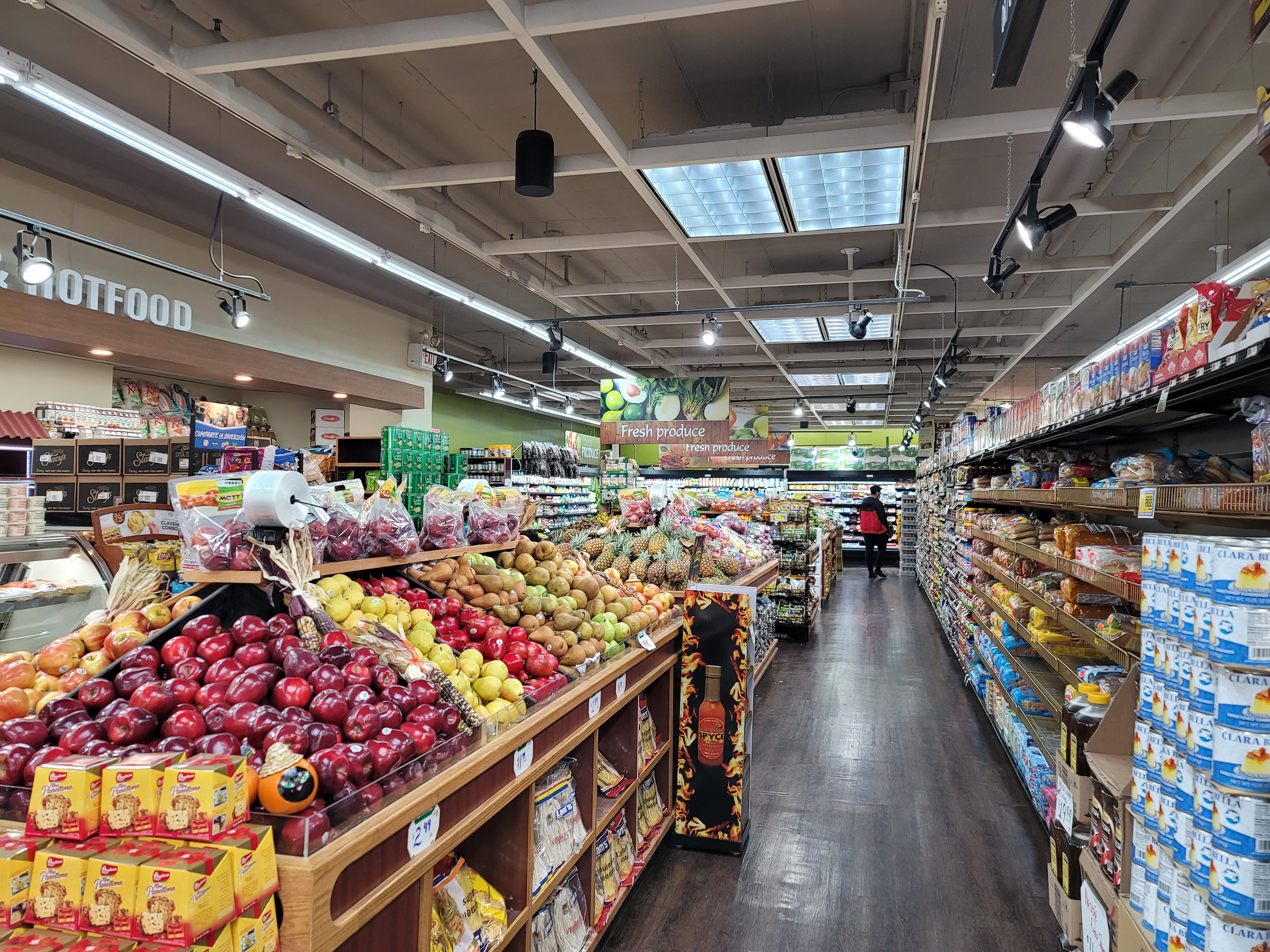
Ever since I started writing about the Starling Avenue Food Shopping Triangle, things have been changing. In particular one of the three supermarkets that form the triangle, the Pioneer at 1345 Castle Hill Avenue was closed for renovations and when it was almost ready, we had the Covid lockdowns... and now they are open again and they just had their grand opening.


I did a quick survey of the aisles from a Whole Foods, Plant-Based perspective and I found some good stuff, so I'll post some of my findings here. I might do more some other time.


Massive area for fruits, veggies right when you come in. Breads on the right, was not great. (no Dave's Killer Bread, which is the only bread I buy, short of Ezekiel).

Some more pics:


Pretty good selection here...

    Great selection of herbs as well as things like red leaf lettuce, which I love...


And Wasa crackers, which are delicious and totally fat-free.


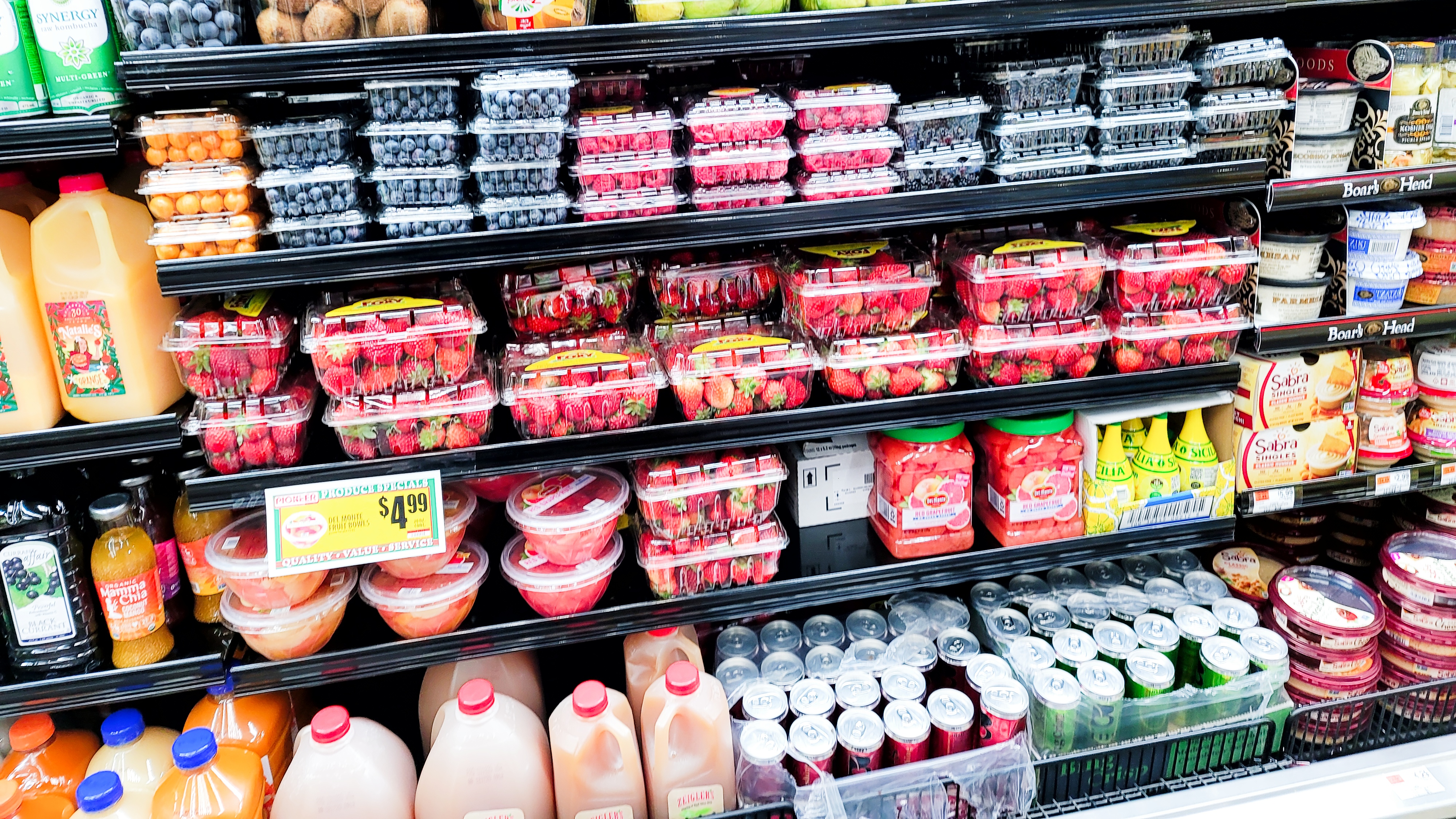
Tons of berries.


College in broth was on sale at 2 for $5.00 so I nearly cleaned them out.


And a good selection of grains, including Quinoa and so on...


I did not see too much whole wheat pasta, but at least they had some.


And a decent selection of herbs.


And, I should not forget, a whole section of Bob's Red Mill products, which is also a welcome addition. Key foods has some, but this is a pretty extensive selection!


Anyway, that is it for now. Definitely worth a visit. In my book the Wasa bread in particular is a great find. Other crackers may be low in fat, but Wasa proves it can be done without fat altogether, and taste-wise it has always been one of my favorites, ever since it started to appear in Holland in the 1960's.


I am happy to see that the Starling Avenue Triangle is restored to its former glory, and this store is a darn sight better than the old one was.


Thursday, October 22, 2020

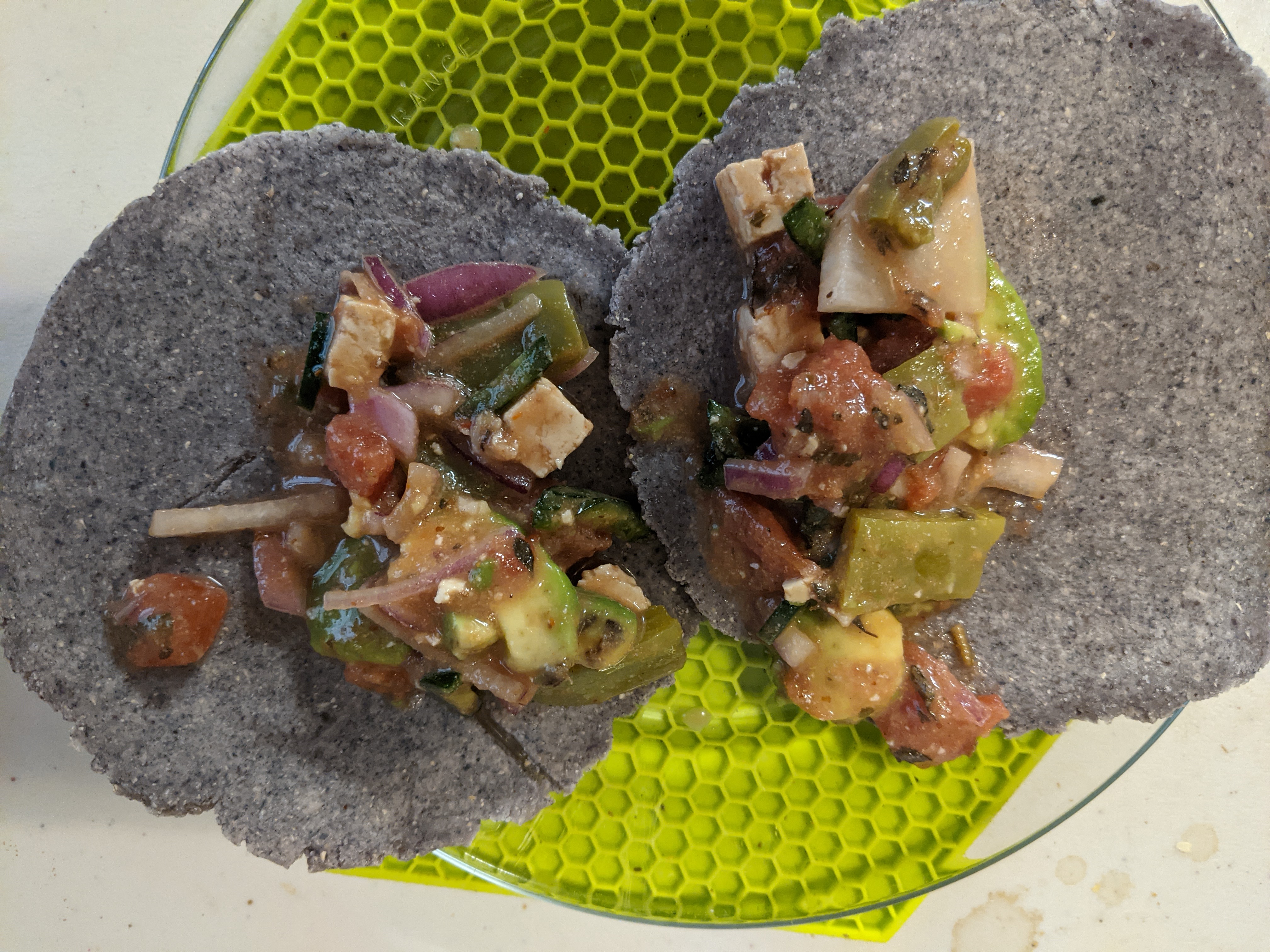
MEX #WFPB 002 - Ensalada de Nopales - Cactus Salad

 I wrote about cactus salad the first time in January. When I was just hoping to start doing some cooking classes on Mexican cuisine #WFPB style. Covid came along. You know the rest.


But I've gotten back to trying to develop some recipes. And the next evolutionary step follows below:

Ingredients:

3 good size Cactus leaves, cleaned.
1 Red Onions
15 Oz can of diced Tomato
Optional: avocado
1/2 bunch Cilantro
2 tbsp (Mexican) Oregano
some Radish or daikon, possibly pickled...
Serrano peppers and/or fresh jalapeño, or Jalapeño in vinegar
3/2/1 dressing with lemon and lime
Pepper to taste
Variations: with cubes of firm tofu, or with cevici-style marinated mushrooms


Preparation:

  • Cut the cactus leaves in 1" strips and cut in 1/2" chunks.
  • Cook in boiling water with some onion and garlic.
  • Let cool
  • meanwhile:
    • Cut up the red onion
    • Combine with the diced tomatoes
    • add the cilantro, Mexican Oregano
    • add in the radishes, cut fine, and/or the avocado, cut in slivers.
    • cut up the peppers (jalapeño, serrano, as the case may be)
    • add the salad dressing
    • mix and add in the nopales when cool.
    • Let it marinate in the fridge.

Serving suggestion: with tortillas, or just by itself.

Obviously, you can make this as mild or as spicy as you want.


Sunday, October 18, 2020

Mex #WFPB 001 - Three Sisters Posole Remix

 Just before the Corona virus madness, the plan was to do  a series of Mexican classes in my cooking classes at St. Helena's. Hopefully, we will resume in the spring, but until then, I am going to discuss some Mexican recipes.


I will use as my guide the Mexican Recipe section on Nutrition Studies, en Español. 


Yesterday, I made a Three Sisters Posole, but a kind of derivative of the recipe on Nutrition studies. I can never stop improvising, improving (and sometimes making it worse, but learning all the time).

The recipe for Three Sisters Posole

Here are the original recipes on Nutritionstudies in English and Spanish.

So here goes with the revised instructions, but I will include the links to the original. One problem I ran into, my local Mexican grocery did not have blue corn posole, so instead I used Hominy, which is Nixtamalized Corn. Chang Li Market has hominy from the Mama Tere brand. You can get Blue Corn Posole on Amazon. I'll try that next time.


Ingredients 

  • 2 cups dried blue corn posole, or hominy 
  • 1 cup tepary beans, or any kind of small beans 
    • Optional: you can add some summer Savory to the beans while cooking them
  • 1 cup barley (optional) 
  • 2 medium zucchini
  • 4 garlic cloves
  • 2 tsp Mexican Oregano
  • 1 Tbsp ground red chile
  • 8 cups vegetable stock
  • 2 tbsp arrowroot
  • 1 bunch of scallions
  • 1 lime
  •  Sea Salt to taste

Preparation

  • Cook posole for 2 hours until tender - or shorter if using a pressure cooker. (Hominy in Instant Pot for 15-20 mins on High pressure)
  • Cook the beans separately 1.5-2 hours until tender (Instant Pot for 7 mmins or so).
  • In a large pot, add the minced garlic, chopped onion, zucchini, oregano,, ground chile, and vegetable stock. Bring to a boil.
  • Add the cooked posole and beans as well as the barley, if you are using it.
  • Reduce heat and simmer for about 30 minutes to allow the flavors to come together.
  • Turn off the heat. Dissolve the 2 tbsp of arrowroot into the soup last and mix in well to thicken the soup.
  • Add Seasalt to taste
  • Serve with warm tortillas, wild onions, or scallions. and a squeeze of lemon or lime.

For the most part, you can play a lot with the level of spiciness, and also bear in mind that adding the arrowroot makes it thicker, but also milder.